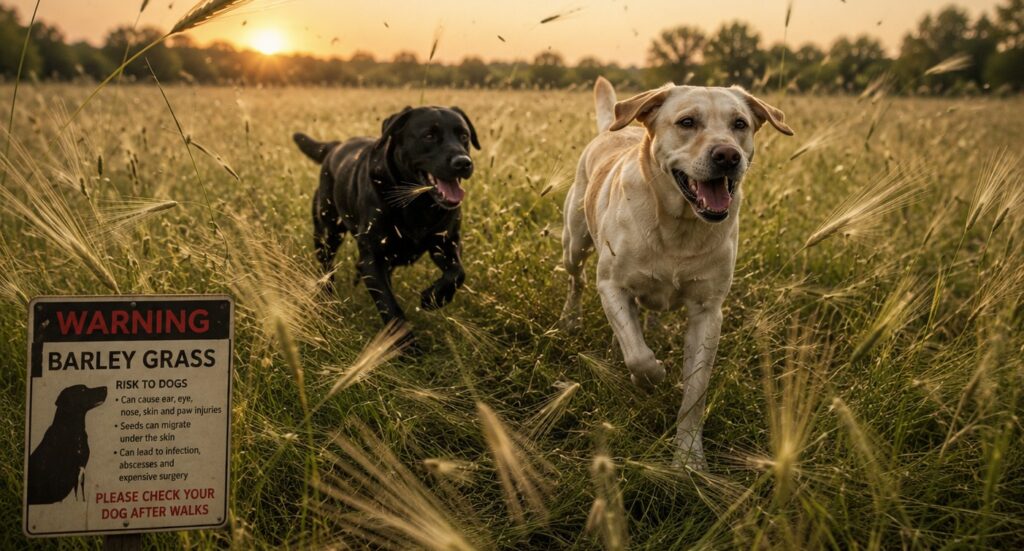
At first glance, barley grass and other grass seed heads may seem harmless, but for our dogs they can become a veterinary emergency.
These sharp, barbed grass seeds are designed by nature to move in only one direction. Once they become attached to a dog’s coat or work their way into the skin, they don’t simply fall out, they continue to travel forwards.
They commonly enter through the gaps between:
- Toes
- Ears
- Eyes
- Nose
- Mouth
- Under the skin
Once beneath the skin, they can migrate through tissue, causing severe pain, inflammation, abscesses and infection. In some cases, they travel remarkable distances from where they first entered.
I know of one dog that developed a swelling in its armpit after weeks of unexplained pain. Numerous veterinary consultations, scans and tests failed to identify the cause.
Eventually, surgery was performed and the culprit was discovered… a single grass seed that had entered through the dog’s foot and gradually travelled up the leg before lodging in the armpit. The dog endured weeks of pain and discomfort, the owners experienced enormous emotional stress, and the veterinary costs ran into thousands of pounds.
Sadly, this isn’t an isolated story. Every summer, veterinary practices across the UK treat dogs suffering from injuries caused by grass seeds.
What signs should you look for?
- Excessive licking of a paw
- Limping
- Swelling between the toes
- Shaking the head or scratching at an ear
- Sudden squinting or excessive tears from one eye
- Sneezing repeatedly or bloody discharge from one nostril
- Small lumps or draining abscesses beneath the skin
- Reluctance to walk or obvious pain
Prevention is always better than treatment
After every walk, especially through long grass:
- Check carefully between every toe.
- Feel the paws for swelling or tenderness. Look inside the ears (without inserting anything).
- Check around the eyes.
- Brush through the coat, particularly around the feet, legs, armpits and feathering.
- Remove any grass seeds immediately before they have a chance to work into the skin.
If your dog suddenly starts limping, shaking its head, squinting or excessively licking a paw after a walk, don’t wait. Early veterinary treatment can prevent a simple grass seed becoming a major operation.
As dog owners, we all want more wildlife-friendly spaces, but there is a significant difference between beautiful, species-rich wildflower meadows and unmanaged verges dominated by hazardous barley grass. We can support biodiversity while also protecting the health and welfare of the dogs that share our community.
Please check your dog after every walk. It only takes a few minutes, but it could save them from weeks of pain, major surgery and thousands of pounds in veterinary bills.
Share this post: on Facebook